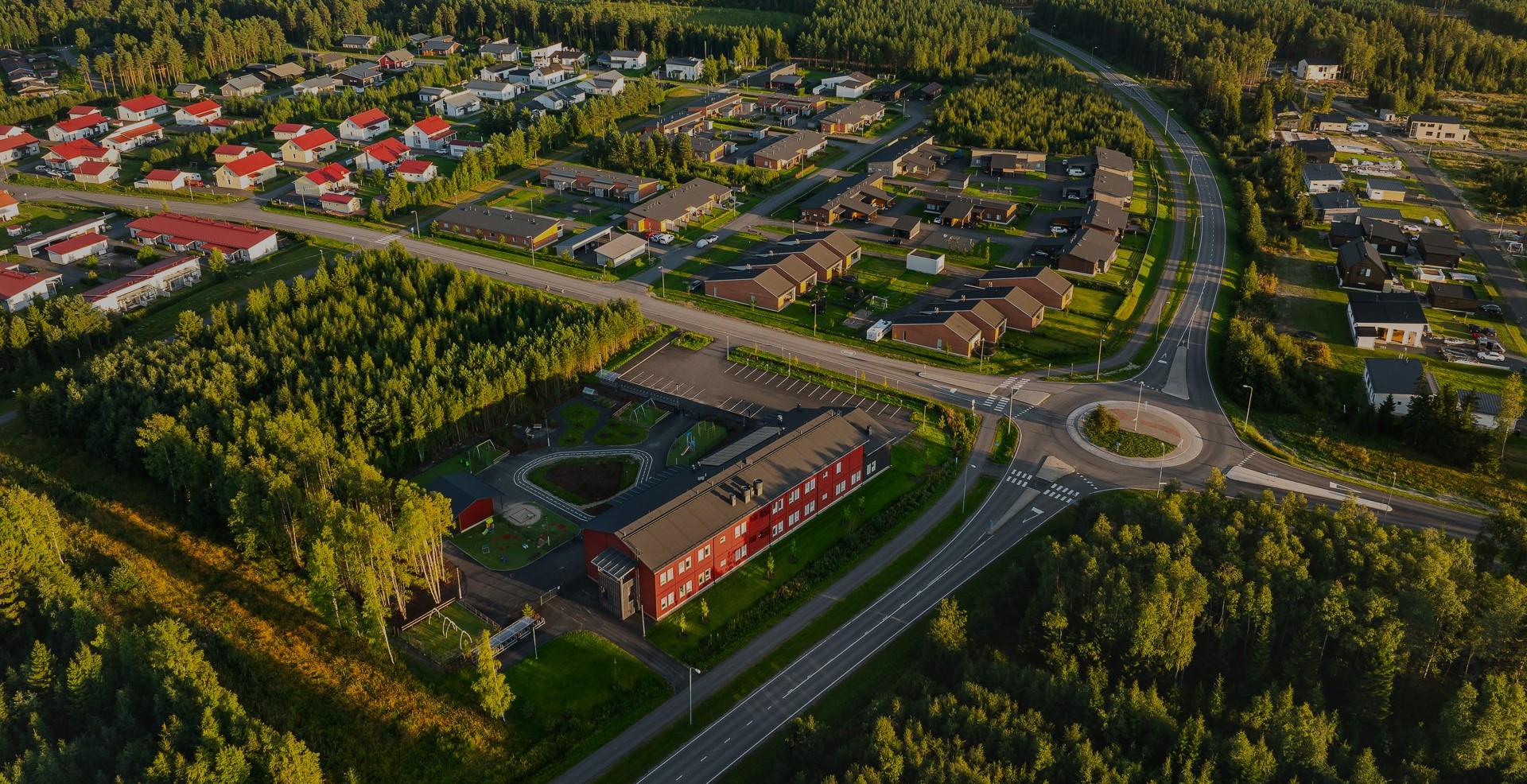
One Building, Many Lives – Flexibility for Future Needs
Global trends are visible in the real estate and construction sector, where the need for fresh thinking and smarter solutions is becoming ever more apparent. The industry accounts for over one-third of carbon dioxide emissions, and access to materials is becoming more uncertain. But what if, alongside traditional buildings, we embraced dynamic, easily adaptable solutions – ones that can even be relocated?
Traditionally, the life cycle of buildings has been linear: when there’s a need for something new, we build it – and when renovation is no longer feasible or the building is no longer in use, it gets demolished. However, increasingly unpredictable demographic shifts are challenging this approach, especially in the public sector. For example, a municipality in Ostrobothnia, Finland might currently need a new school for a specific number of students, but that need could decrease dramatically well before the building reaches the end of its lifecycle. We need new solutions alongside the traditional construction sector.
What if buildings were designed to adapt to the needs of the people they serve? These are called dynamic buildings – modular rental buildings that can be scaled, relocated, and reconfigured multiple times during their lifespan. In our Ostrobothnian school, the demographic shifts would already have been taken into account during the design phase.
It goes without saying that traditional construction is still essential: Helsinki’s stunning Oodi library is right where it belongs, and historical buildings are a vital part of our cultural heritage. While dynamic, modular construction doesn’t solve all the challenges in the sector, it adds valuable flexibility to the public service network. The future is becoming increasingly difficult to predict and plan for. We can, however, build with that in mind.
Materials Circulate When a Daycare Is Relocated
In construction, the circular economy is often associated with material reuse which is undoubtedly important. That said, relocatable buildings take the circular economy one step further. A life cycle assessment (LCA) conducted by a third party for Parmaco shows that relocating a dynamic building three times can result in up to 72% lower life cycle emissions compared to constructing new buildings.
Municipalities and cities are becoming increasingly capable of setting higher standards for public construction. Quality becomes especially important when buildings are intended to be repurposed according to circular economy principles. The Veräjäpelto Daycare Center in Leppävaara, Espoo, demonstrates this in a concrete way. Most of its spaces were built from three already existing buildings. In fact, 84% of the space consists of upcycled modules. Building quality can be ensured when ownership of design, production, and maintenance is held by a single, accountable provider.
It’s time to rethink how we define buildings. They must adapt to our needs – not the other way around. By doing so, we can make a profound impact on the construction industry’s carbon footprint and material challenges. We need solutions that stand the test of time without unnecessary overbuilding.

This blog post was originally published in Finnish as part of Green Building Week, organized by the Green Building Council network. You can read it here.
Did you know that we rent out over 400 public buildings in Finland and Sweden? Explore our references!